


I believe in memory not as a place of arrival, but as a point of departure—a catapult throwing you into present times, allowing you to imagine the future… It would be absolutely impossible for me to have any connection with history if history were just a collection of dead people, dead names, dead facts. That’s why I wrote “Memory of Fire” in the present tense, trying to keep alive everything that happened and allow it to happen again, as soon as the reader reads it.
Eduardo Galeano – “The Memory of Fire Trilogy: Genesis, Faces and Masks, and Century of the Wind.”
The value and influence of historical tradition in contemporary life are undeniable. Paraphrasing the American writer James Baldwin, we might say that the power of tradition derives from the fact that it is deeply ingrained within us: it shapes, often unconsciously, our thoughts and actions and is, quite literally, present in everything we do. To tradition we owe the framework of our cultural references, our cultural identities, and our ontological assumptions and expectations. In this sense, tradition does not belong exclusively to the past; it is an active part of the present. It shapes our relationship with ourselves, our families and communities, society, and the world around us. We embody the tradition we have inherited and, at the same time, participate in its continual formation. In a sense, we ourselves are bearers of our own historical tradition. As identities and cultures change over time, however, so too does the way in which we understand and narrate the past. The collectively shaped historical memories that emerge from this process, in turn, contribute to the formation of the cultural identities of future generations. The documentation, study, and interpretation of our historical tradition therefore constitute an ever-evolving, unfinished undertaking — much like human life itself.
THE ARCHIVE: HISTORY – RESEARCH ACTIVITY – METHODOLOGY
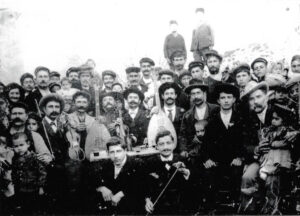
The research project, which began in 2019, was grounded in a qualitative epistemological and methodological framework that recognizes the importance of situating research within the specific social, cultural, and historical environment in which the musical practices under study develop. The collection of material followed contemporary ethnomusicological and ethnographic practices and included, among other activities:
• on-site audiovisual documentation of musical activities;
• the production of a series of newly commissioned historical audio and video recordings designed to preserve older and more recent instrumental and vocal techniques, as well as the distinctive stylistic features of the islands’ traditional music;
• interviews with older and younger local musicians — professional, semi-professional, and amateur instrumentalists and singers — aimed both at compiling detailed biographical profiles and at exploring their personal and experiential relationship with music, their artistic experiences, cultural background, artistic presence, and contribution to their communities;
• interviews with other members of the local communities who, while not necessarily musicians themselves, are actively involved in the islands’ cultural life, in order to investigate more fully the character, function, and content of musical activities as cultural practices;
• the identification, preservation, systematic documentation, and digitization of existing original audio, audiovisual, printed, and related materials, most of which had previously been dispersed among small private collections;
• the identification, documentation, digitization, and scholarly editing of oral and printed sources relating to the islands’ folk-poetic traditions and their folk poets.
The extensive body of material collected, documented, processed, and incorporated into the Digital Audiovisual Archive has been organized across multiple levels of information, allowing users either to browse the material in a concise form or to explore it in greater depth. Users may determine for themselves the extent to which they wish to engage with the available information. In this way, the Archive is accessible both to a broad Greek and international audience and to researchers, musicians, educators, and other interested users.
The Digital Audiovisual Folk Music Archive of Amorgos and its Islands serves as a dynamic online space for the preservation, study, and dissemination of an important part of the musical traditions of the Aegean and their associated cultural heritage. Its aim is to provide a meaningful resource for the humanities and education and to contribute to the development of interdisciplinary research in the fields of Greek folklore studies, ethnomusicology, ethnography, and social anthropology. In this sense, the Archive is of considerable interest at both the national and international levels.
THE ISLANDS – HISTORY AND CULTURE
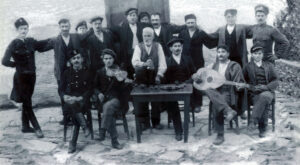
1. Anthropogeography
Amorgos is the easternmost island of the Cyclades, situated southeast of Naxos and northwest of Astypalaia. It is long and narrow in shape, and its terrain is crossed by a succession of mountain ranges. Its highest peak is Krikellos, or Kroukelos (822 m), which was covered with oak trees and rich vegetation until the great fire of 1835. The coastline is only slightly indented but is particularly steep and rugged. The western coast contains a small number of sheltered bays, including the modern ports of Katapola and Aigiali, while the eastern coast is characterized by an exceptionally precipitous landscape. The island’s mineral resources are limited, apart from some bauxite deposits.
2. History
During the Early Cycladic period (3rd millennium BC), Amorgos emerged as one of the most important centers of the Aegean. This is attested by more than twelve fortified acropolises on hilltops and promontories—the most important being Markiani—as well as by cemeteries such as Dokathismata and Kapsala, the development of marble sculpture and figurine production, including some of the earliest examples of monumental sculpture, and the establishment of figurine workshops. Metalworking and navigation also developed extensively. Its strategic position between the Cyclades and the Dodecanese made Amorgos an important center in the expansion of bronze-working culture throughout the wider Aegean.
The rise of Minoan civilization influenced Amorgos during the Middle Cycladic period (2000–1600 BC), transforming the island into a trading station within the sphere of Minoan maritime power (1600–1450 BC). The foundation of Minoa appears to date from this period and is associated with the tradition that King Minos of Crete chose the site for the construction of his summer palace. During the height of Mycenaean civilization (1400–1200 BC), populations from mainland Greece settled on Amorgos, integrating it into the broader Mycenaean cultural world and taking advantage of the island’s central position within Aegean networks of communication.
The Geometric period (10th–8th centuries BC) was marked by the arrival of Ionian settlers from Naxos, who founded Arkesini in the southeastern part of the island. In the 7th century BC, Ionians from Miletus founded Aigiali on the northern part of the western coast. Together with Minoa, these two cities formed the principal centers of the island’s cultural development throughout antiquity. They constituted the federation of Tripolis, developed as city-states in accordance with the political structures of the period, and enjoyed considerable prosperity.
Benefiting from its strategic location between mainland Greece and the coast of Asia Minor, Amorgos participated in the major political and historical developments of the period. It took part in the Persian Wars and subsequently joined the Athenian League, surrendering part of its autonomy to Athens. In 337 BC the island came under Macedonian control, while in 322 BC the naval Battle of Amorgos was fought between Macedonian forces and the Athenians, ending in an Athenian defeat. The choice of Amorgos as the site of this confrontation reflects the island’s strategic importance within the wider Aegean.
During the Roman period, Amorgos declined and was used as a place of exile. In antiquity, the island was also known for the production of women’s tunics made from a locally cultivated flax fiber known as “amorgos.”
Little information survives concerning Amorgos during the Byzantine period, apart from the fact that it belonged to the Theme of the Aegean. The imposing Monastery of Panagia Chozoviotissa, built in the 11th century on the precipitous slopes of Mount Profitis Ilias, is the most important monument of this period.
The centuries that followed were turbulent. Amorgos became the target of repeated and prolonged pirate activity, leading to the abandonment of coastal settlements and the relocation of inhabitants to fortified settlements inland. In 1309 the island became part of the Latin Duchy of the Aegean, inaugurating a new period of rivalry, first among Venetian nobles and later between Catalans and Ottomans. In 1537 Hayreddin Barbarossa captured the island.
Ottoman rule brought an end to this prolonged period of instability. Economic and political privileges granted by the Sultan contributed to the development of Amorgos as an important Aegean port. The island participated actively in the Greek War of Independence of 1821 through its naval forces. Following the establishment of the government of Ioannis Kapodistrias, an elementary school using the monitorial system was founded on the island as part of the broader program for the organization and development of education.
During the 19th century, many inhabitants of Amorgos migrated to Athens and contributed to the construction of the new Greek capital, resulting in significant demographic decline on the island. During the dictatorship of Ioannis Metaxas in the 1930s, Amorgos was used as a place of exile. In 1941, during the Axis occupation of Greece, the island initially came under Italian administration. Following Italy’s capitulation in 1943, Amorgos came under German occupation until its liberation in 1944.
SOURCE: Foundation of the Hellenic World – Cultural Portal of the Aegean Archipelago
URL: http://www2.egeonet.gr/Forms/fLemmaBodyExtended.aspx?lemmaID=10401
1. Anthropogeography
Donousa is the northeasternmost island of the Islands of Amorgos – also known as the “Small Eastern Cyclades”. The island group extends through the sea between Naxos and Amorgos and also includes Irakleia, Keros, Koufonisia, and Schinousa. Donousa lies 9 miles east of Naxos and 14 miles north of Amorgos, covers an area of 13 sq km, and has a permanent population of approximately 160 inhabitants. The terrain is semi-mountainous, with Mount Papos (383 m), located approximately at the center of the island, forming its highest point. Donousa has few lowland areas and predominantly shrubby vegetation suitable for livestock farming. Zinc deposits have been identified at several locations in its subsoil. Its coastline is deeply indented, forming elongated rocky promontories and a succession of small bays.
2. History
The earliest traces of habitation on Donousa date from the Early Cycladic period (3rd millennium BC), as demonstrated by the two settlements at Achtia ton Agrilion and Myti tou Trachyla. These formed small communities whose inhabitants relied primarily on livestock farming and fishing and participated in the wider cultural environment of Early Cycladic civilization.
The island reached a period of particular prosperity during the Geometric era (10th–7th centuries BC), reflected in the fortified settlement at the now-deserted site of Vathy Limenari in the southeast of the island, close to Myti tou Trachyla. Important finds from the site suggest stronger cultural influences from the Dodecanese than from the Cyclades. A number of cremation burials and pyres, characteristic of burial practices during this period, have also been identified around the settlement.
Little is known about subsequent periods, although Donousa was used as a place of exile during Roman times. During the Middle Ages and the period of Ottoman rule, the island served both as a base for pirate activity and as an important area for grazing and fishing. In 1941 Donousa initially came under Italian administration during the Axis occupation of Greece. Following Italy’s capitulation in 1943, the island came under German occupation until its liberation in 1944.
SOURCE: Foundation of the Hellenic World – Cultural Portal of the Aegean Archipelago
URL: http://www2.egeonet.gr/Forms/fLemmaBodyExtended.aspx?lemmaID=10467
1. Anthropogeography
Iraklia — also known as Arakleia, Rakleia, or Irakleitsa — is the westernmost and southernmost of the Islands of Amorgos – also known as the “Small Eastern Cyclades”. The island group extends through the sea between Naxos and Amorgos and also includes Donousa, Keros, Koufonisia, and Schinousa. Irakleia lies south of Naxos, 19 miles from Amorgos and 6 miles from the eastern coast of Ios, and has an area of 18 sq km. The terrain is predominantly mountainous, with Mount Papas (419 m) forming the island’s highest point. Its coastline is steep and deeply indented, creating numerous enclosed coves protected from winds and sea currents. The island’s flora resembles that of the other islands in the group and consists primarily of a variety of shrubs and low-growing trees. In several areas, relatively fertile and cultivable plateaus are also found.
2. History
The historical and archaeological evidence available for Irakleia is limited, but it allows us to form a general picture of the island’s development over the centuries.
During the Early Cycladic period (3rd millennium BC), two small settlements existed at Kambos Agiou Athanasiou and Agios Mamas, whose inhabitants depended on agriculture, livestock farming, and fishing. At Agios Mamas, the settlement’s cemetery, containing cist graves, has also been identified. At the promontory of Agios Georgios in the northeast, a blade made from Melian obsidian was discovered, indicating that the island participated, albeit on a limited scale, in the trading networks of the Early Cycladic period, which were characterized by the expansion of maritime routes and navigation.
The fortified site of Kastro at Livadi belongs to the historical period, particularly the Hellenistic era (4th–2nd centuries BC). The fortification includes impressive tall rectangular towers, while traces of several successive historical phases, including the Hellenistic and Roman periods, are visible within it. Comparable remains have been found at a number of other locations on the island.
For the early modern period, particularly Ottoman rule, available evidence suggests that the island’s enclosed and difficult-to-access coves provided ideal hiding places for Christian pirates, whose activities strongly influenced the daily lives of the inhabitants. Little further information survives concerning the island’s early modern history.
Following the Greek War of Independence of 1821, Irakleia became part of the newly established Greek state, together with the other Cycladic islands. In 1941, during the Axis occupation of Greece, it initially came under Italian administration. Following Italy’s capitulation in 1943, the island came under German occupation until its liberation in 1944.
SOURCE: Foundation of the Hellenic World – Cultural Portal of the Aegean Archipelago
URL: http://www2.egeonet.gr/Forms/fLemmaBodyExtended.aspx?lemmaID=10414
1. Anthropogeography
Keros lies in the sea between Naxos and Amorgos and, together with the neighboring islands of Irakleia, Schinousa, Koufonisia, and Donousa, forms the Islands of Amorgos complex – also known as the “Small Eastern Cyclades”. Today the island is completely uninhabited.
Its terrain is semi-mountainous, with Mount Papas (432 m) as its highest point. The central part of the island is dominated by the elevations of Plateia Rachi (315 m) and Panagitsa (274 m), while lower and more fertile areas extend closer to the coast. The coastline is only slightly indented, and small, sheltered coves are formed at only a few locations, principally along the southern and northeastern shores.
2. History
The historical importance of Keros contrasts sharply with its uninhabited and deserted appearance today. During the Early Cycladic period (3rd millennium BC), Keros developed into one of the most important centers of Cycladic civilization. Together with the settlement and cemetery at Chalandriani on Syros, Keros played a defining role in the mature phase of Cycladic civilization, known as Early Cycladic II and dated approximately to 2800–2300 BC. This period is known in international scholarship as the “Keros–Syros phase.” The celebrated figurines known as the “Harpist,” the “Flute Player,” and the “Cup Bearer,” together with the wide variety of marble and ceramic vessels and other objects originating from sites on the island, including Kavos Daskaleiou and Konakia, demonstrate the central role of Keros in the development and dissemination of characteristic features of Cycladic civilization.
Little is known about later periods, apart from the fact that Keros joined the Athenian League after the Persian Wars, as did most of the Cycladic islands, under the name Kereia. During the Middle Ages, Keros, like the wider group of the eastern Cyclades, served as a base and refuge for pirates, and the island’s economy and the lives of its inhabitants were profoundly shaped by piracy.
In the early modern period, Keros belonged to the Monastery of Panagia Chozoviotissa on Amorgos. In 1952 it passed into the administration of the Agricultural Service, which made the island available for grazing.
3. The “Treasure of Keros”
The importance of Keros during the Early Cycladic period is further reflected in the so-called “Treasure of Keros.” This assemblage consists of several hundred objects in the Cycladic tradition, including intact marble figurines and deliberately broken fragments of figurines, marble and ceramic vessels, stone tools, and other small objects dating to Early Cycladic II. Their precise original provenance is not known. The assemblage was dispersed through illicit antiquities trafficking and removed illegally from Greece during the 1950s, eventually entering museums and collections around the world. Part of the “Treasure” has since been repatriated and is now housed at the Museum of Cycladic Art in Athens. Following archaeological excavations on Keros, Kavos Daskaleiou on the island’s western coast was proposed as a possible place of origin for the assemblage. Despite extensive and destructive looting, the site contains an open-air deposit of numerous broken figurines, marble vessels, and pottery fragments, creating what might be described as an enlarged counterpart to the “Treasure of Keros.” The interpretation of the site remains difficult. It does not appear to have been an ordinary settlement, cemetery, or workshop, since the objects were not unfinished but deliberately broken. The most widely accepted interpretation, associated with C. Renfrew, is that the site may have functioned as a sanctuary or as a place for the ritual deposition of intentionally fragmented objects carrying symbolic meaning. The discovery by archaeologist Christos Doumas of a cave at a site associated with Early Cycladic finds also led to the hypothesis that Keros may have functioned as a sacred island of the Cyclades, a “gateway to the Underworld,” to which neighboring island communities brought the remains of their dead. The unusual nature of Kavos Daskaleiou highlights the central yet still difficult-to-interpret role of Keros. The discovery of an Early Cycladic fortified settlement and cemetery on the islet of Daskaleio, which in antiquity was connected to the coast, may contribute to a fuller understanding of the island’s significance.
SOURCE: Foundation of the Hellenic World – Cultural Portal of the Aegean Archipelago
URL: http://www2.egeonet.gr/Forms/fLemmaBodyExtended.aspx?lemmaID=10425
Pano Koufonisi
1. Anthropogeography
Pano Koufonisi—also known as Ano or Epano Koufonisi, and commonly simply as Koufonisi— belongs to the Islands of Amorgos complex – also known as the “Small Eastern Cyclades”. Pano Koufonisi lies southeast of Naxos and west of Amorgos. With an area of only 5.77 sq km and a population of 366 inhabitants, it is the most densely populated island in the Cyclades. It is separated from Kato Koufonisi by a narrow strait approximately 200 m wide and between 5.5 and 8 m deep. Geographic isolation, limited natural resources, the island’s small size, and the morphology of its terrain are among the challenges its inhabitants have historically faced. According to the linguist St. Manesis, the name Koufonisi derives from the erosion of the local rock formations, which creates hollows and cavities in the soft porous stone. The island’s main settlement, Chora, is built on the southwestern side of the island directly above the small harbor.
2. History
Little information survives concerning the history of Pano Koufonisi, but archaeological evidence indicates that the island has been inhabited since prehistoric times and prospered during antiquity. The sea between Pano Koufonisi, Kato Koufonisi, and Keros was known in antiquity as Kofos Limin (“Kofos Harbor”). The most important evidence for the island’s pre-Christian history comes from archaeological finds, including Early Cycladic cemeteries and settlements dating to the 3rd millennium BC. Excavations have brought to light material from the early phases of Cycladic civilization as well as from the Hellenistic and Roman periods.
Pano Koufonisi later formed part of the Roman and subsequently the Byzantine world. Following the establishment of the Duchy of the Aegean in the early 13th century, the island came under Frankish rule. Together with the other Cycladic islands, it was conquered by the Ottomans in 1537. During the Ottoman period it served as a base and refuge for pirates.
Under the London Protocol of 1830, Pano Koufonisi became part of the newly established Greek state together with the rest of the Cyclades. In 1941, during the Axis occupation of Greece, it initially came under Italian administration. Following Italy’s capitulation in 1943, the island came under German occupation until its liberation in 1944. During the postwar decades, its population remained relatively stable.
SOURCE: Foundation of the Hellenic World – Cultural Portal of the Aegean Archipelago
URL: http://www2.egeonet.gr/Forms/fLemmaBodyExtended.aspx?lemmaID=10428
Kato Koufonisi
1. Anthropogeography
Kato Koufonisi belongs to the Islands of Amorgos complex – also known as the “Small Eastern Cyclades”. Kato Koufonisi lies southeast of Naxos and west of Amorgos. It covers an area of 3.89 sq km. The island is characterized by shrubby vegetation and was formerly inhabited by a small number of farmers and livestock breeders, many of them originating from Amorgos. Kato Koufonisi belonged to the Monastery of Panagia Chozoviotissa on Amorgos, whose livestock grazed there under the care of Amorgian shepherds living on the island.
2. History
Little information survives concerning the history of Kato Koufonisi, but archaeological finds indicate that it was inhabited from prehistoric times. Excavations have brought to light remains from the early phases of Cycladic civilization, including an Early Cycladic cemetery and structures dating to the 3rd millennium BC, as well as material from the Hellenistic and Roman periods. One of the island’s landmarks is the small church of Panagia, built on the quay over ancient remains. Kato Koufonisi broadly shared the historical development of Pano Koufonisi. It formed part of the Roman and Byzantine worlds, came under Frankish rule in the early 13th century, and in 1537 was conquered by the Ottoman fleet together with other Cycladic islands. During the Ottoman period it served as both a refuge and a base for pirates.
In 1830 the island was incorporated into the newly established Greek state together with the other Cycladic islands. In 1941, during the Axis occupation of Greece, Kato Koufonisi initially came under Italian administration. Following Italy’s capitulation in 1943, it came under German occupation until its liberation in 1944.
The island’s limited natural resources and geographical isolation eventually led its inhabitants to migrate to neighboring islands and urban centers. Its population declined steadily from the 1950s onward, and by the 1990s the island was considered uninhabited.
SOURCE: Foundation of the Hellenic World – Cultural Portal of the Aegean Archipelago
URL: http://www2.egeonet.gr/Forms/fLemmaBodyExtended.aspx?lemmaID=10429
1. Anthropogeography
Schinousa is part of the Islands of Amorgos complex – also known as the “Small Eastern Cyclades”. Schinousa lies south of Naxos and northeast of Irakleia. The island is hilly and contains numerous coves, including Tsigouri, Livadi, and Psili Ammos. Its highest point is Milos, at an elevation of 133 m. Schinousa covers an area of 8.14 sq km and has a population of approximately 206 inhabitants. Traditionally, the island’s inhabitants have been primarily engaged in agriculture. The population is distributed among three settlements: Panagia, or Chora; Mesaria; and Mersini, also known as Mersinia. According to local tradition, the name of the island derives from the schinos plant, which grows abundantly there. Another interpretation associates the name with the Venetian nobleman Schinoza. I. Ragavis writes of the island’s name: “A deserted island south of Naxos, mentioned by Pliny, which preserved the ancient name it received from the many schinos plants growing upon it.” The island has also been known by the names Echinousa and Panidia.
2. History
Relatively little information survives concerning the history of Schinousa. Much of what is known comes from references in administrative and ecclesiastical records from neighboring islands such as Naxos and Amorgos. Archaeological evidence nevertheless indicates that the island was inhabited from antiquity and participated in the Early Cycladic cultural world centered on nearby Keros. Finds from both land and sea—including figurines, marble columns, pottery, and ancient remains at Mesaria—attest to cultural activity on the island from an early period. The area around the ruined Church of Timios Stavros at Tsigouri is of particular archaeological interest. Beneath the medieval settlement, architectural remains from the Hellenistic and Roman periods are visible. Remains of Early Christian basilicas have also been found at Tsigouri, Agios Vasileios, and Profitis Ilias. A medieval tower and other remains from the period of Venetian rule survive on the southwestern side of the island.
During the Byzantine period, Schinousa appears to have experienced significant commercial activity, as suggested by the abundance of Byzantine ceramic finds. From the late 11th century onward, the island belonged to the Monastery of Panagia Chozoviotissa on Amorgos. It later became part of the Duchy of the Aegean under Marco Sanudo.
In 1537, following Hayreddin Barbarossa’s conquest of Naxos, Schinousa came under Ottoman rule. At various times the island was abandoned because of frequent pirate raids. Available evidence suggests that it remained uninhabited for a considerable period during Ottoman rule and began to be resettled around the middle of the 19th century, after it had already become part of the Greek state in 1830.
The settlers who repopulated Schinousa during the mid-19th century came primarily from Amorgos and engaged in agriculture and livestock farming. During the 20th century, however, many inhabitants left the island and settled in Athens in search of better economic opportunities.
From 1941 to 1944, Schinousa shared the experience of the other Cycladic islands, coming first under Italian occupation (1941–1943) and subsequently under German occupation until liberation in 1944. During the postwar decades, geographical isolation and economic, social, and educational pressures again led a significant part of the population to migrate. In more recent decades, however, the population of the island has shown an upward trend.
SOURCE: Foundation of the Hellenic World – Cultural Portal of the Aegean Archipelago
URL: http://www2.egeonet.gr/Forms/fLemmaBodyExtended.aspx?lemmaID=6902
FOLK MUSIC IN AMORGOS AND ITS ISLANDS
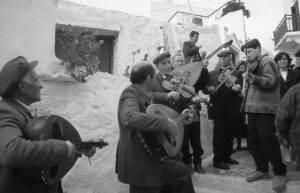
1. 19th Century Travelers’ Reports
The first available reports about music and musical life in Amorgos come from the accounts of 19th century travelers.
The French archaeologist and writer Charles Pierre Gaston Napoléon Deschamps (1861–1931) was appointed a member of the French School at Athens in 1885. He conducted archaeological research on Amorgos, Chios, and in Asia Minor and, in an account published in 1888, wrote: “…I confess that of the people of Amorgos those I loved most were the thoughtful old captains, still wearing the tall cap and quietly smoking their cigarettes sitting on the stern, next to the tiller… There was one I loved especially: captain Markos. The kindness, sweetness and restraint his face showed… Captain Marcos had a small lyre. He played melodies strangely sad and unique, melancholy tunes of unknown origin, which he had learned from his friends in Astypalea, Kos and Bodrum, when his ship was docked there. He divided his time between his lyre, which he kept carefully in a cloth bag as soon as he stopped playing, and his schooner, which he was constantly washing and mending…”
James Theodore Bent (1852–1897) was an English archaeologist and writer widely known for his ethnographic studies. From 1883 to 1888 he focused his research on the Eastern Mediterranean and Asia Minor. Between 1882 and 1884 he traveled extensively through the Aegean islands, including Amorgos, and the results of this research appeared in his book The Cyclades; or, Life among the Insular Greeks (1885) as well as in articles in the Journal of Hellenic Studies.
Writing about the Easter festivities of 1884 in Hora, Amorgos, Bent describes the following:
“… The musicians arrived. Their places were under a waving plane tree in the middle of the square. There were three of them. One had a lute, the second a lyre and the third a flute. They were a lively and endearing group and often played with improvisations. In one of these improvisations the mayor, who was sitting next to me and repeating the words, told me that it was to motivate those who were not particularly keen to dance. I expressed my surprise and perhaps disbelief. Then the mayor went to the musicians and apparently told them to sing an impromptu song for me. Immediately while I was sketching one of the dancers, thinking I was going unnoticed, the musicians made up a couplet for me, which caused me great embarrassment and made everyone laugh. The following:
The costume of Amorgos is very much admired
so the Englishman sitting there made a sketch of it.
So I was completely convinced of the ability of the Amorgian musicians to improvise lyrics… After a half hour delay the chief priest arrived and took his place of honor, which was a stone armchair on the same terrace where we were sitting. This was the signal for the musicians to begin the feast. The worship of the icons, which had lasted a week, was over and the Amorgians were now ready to celebrate… Everyone knows the beauties of the Greek syrtos dance. The dancers, in continuous waves around the plane tree in the village square, dance sometimes fast and sometimes slow, sometimes in a triple line and sometimes in a row, with the lead dancer in front of them jumping and spinning. Thus with dancing and singing the celebration of the week of Easter ended…”
Bent also writes of his visit to the village of Vroutsi on Amorgos:
“…Vroutsi consists of some fifteen houses, built on a rock. In the middle of the settlement we could see some of those semantic writings in half Phoenician – half Greek letters. We had seen similar inscriptions on our way back from Egiali. These archaic scripts are rare on the islands. There is the following Amorgian proverb referring to the hospitality offered by the inhabitants of Vrooutsi: Whoever goes to Vrooutsi and does not get drunk is like going to the Holy Sepulchre and not worshipping. This hospitality is not an empty boast, because as soon as we entered the house of a friend of Fr. Dimitri’s, neighbors started coming in bringing edibles. One with eggs, another with wine, a third with bread. Finally the host came, holding a piglet that he slaughtered, skinned and roasted before our eyes… After the meal there was music, singing and dancing to the tune of an ancient lyre. Upon leaving the next day, our host did not want to take a single penny for all this hospitality…”
2. Instrumental Tunes Performed on Amorgos and its Islands
The principal Instrumental Tunes played on Amorgos and its Islands include the following:
Apokrianos from Egiali: A local instrumental tune/song. In the past, it was not danced.
Apokriatikos from Hora: A local instrumental tune/song. In the past, it was not danced.
Araklianos: A local instrumental tune displaying strong influences from the Cretan musical tradition.
Arapina: An instrumental tune derived from the melody of the song “Yahabibi” (1946) by composer and lyricist Giannis Papaioannou (1913–1972). The song became widely known through recordings by Stellakis Perpiniadis and Odysseas Moschonas. “Arapina” is found only on Amorgos and is danced exclusively by women. According to local tradition, it was formerly danced by seafarers’ wives during evening social gatherings held while their husbands were away at sea.
Thermiotikos: An instrumental tune/song originating on Kythnos, an island also known as “Thermia,” a name associated with its thermal springs.
Karotseris: An instrumental tune originating in Constantinople. It is no longer performed, but in the past it was played and danced throughout Amorgos.
Kitsos: An instrumental tune derived from the kleftiko song “Tou Kitsou i Mana Kathotan,” originating in the musical tradition of Central Greece. The song entered the musical traditions of the Peloponnese and of several Aegean islands, including Naxos, Kea, Kalymnos, and Lesvos, where it is sung and danced as a Syrtos. It is not known when or how the melody entered the musical tradition of Amorgos and evolved into an exclusively instrumental tune danced only by men. Although “Kitsos” is played and danced throughout Amorgos, it is not found on the Islands of Amorgos. In earlier times, it was the first instrumental tune performed in the customary sequence of dances at musical gatherings on the island.
Mandinada from Egiali (Gialitisa): A local instrumental tune/song. In the past, it was not danced.
Mandinada from Iraklia: An old local instrumental tune/song from Irakleia that is no longer performed.
Mandinada from Katapola (Katapoliani): A local instrumental tune/song. In the past, it was not danced.
Mihanikos: An instrumental tune originating on Kalymnos, where it is the island’s best-known tune and dance and is performed exclusively by men.
Balos: An Instrumental tune/song found on many Aegean islands.
Ni Ke Dre: A Carnival instrumental tune of unknown origin, danced exclusively by men. In the past, it was danced only in the Aigiali region.
Politikos: An instrumental tune originating in Constantinople. It is played and danced on almost all the Aegean islands.
Potamos: An instrumental tune/song found on many Aegean islands.
Silivrianos: An instrumental tune originating in Silivria, in the region of the Propontis. In the past, it was one of the principal tunes and dances associated with wedding ceremonies in that region.
Tune of the Lyre: A Local instrumental tune.
Tune of the Bride (Nifiatikos): An instrumental tune found on many Aegean islands. It is traditionally played as the bride proceeds from her home to the church.
Tune of the Groom: This is not an independent instrumental tune but a section of the “Tune of the Bride” that is no longer performed.
Sousta from Amorgos: A local instrumental tune accompanied by a distinctive form of dance unlike the Sousta traditions of the other Cycladic islands.
Syrianos: An instrumental tune/song found on many islands of the Cyclades.
Tsabouna: An instrumental tune found on many islands of the Cyclades.
Ydraiikos: An old local instrumental tune that is no longer performed.
3. Music Performance Spaces
According to converging testimonies from informants on Amorgos and its Islands, the principal spaces of social gathering in which musical events and, more generally, musical performance took place included the following:
AMORGOS
Tholaria
Café “Rakezo,” on the site now occupied by the bar of the same name — first opened before World War II
“Mihanelis” Café, on the site now occupied by the Tholaria Cultural Center — first opened before World War II
Café/grocery store “Horeftis,” owned by the Nomikos family — first opened before World War II
Café “Smyrni” – first operated during the occupation
Café “Koukli,” near the site now occupied by the restaurant “Panorama” — first operated during the occupation
Portokalis Café, known as “Seladi,” in the Seladi area — first opened in the postwar period
Oikonomidis Café, in the Seladi area — first opened in the postwar period
Café/grocery store “Kali Kardia,” owned by the Oikonomidis family — first opened in the postwar period
Restaurant “Panorama,” on the site still occupied by the restaurant of the same name and owned by the Theologitis family — first opened in the early 1970s
Lagada
Portokalis Café, owned by Nikolaos Vasalos, on the site now occupied by Vasalos Restaurant — first opened in the 1950s
Hora
Café “Fotodotis,” owned by the Gavras family — first opened before World War II and continues to operate today
“Kastanis” Café, on the site now occupied by the restaurant of the same name — first opened before World War II
“Malaspinos” Café, owned by Georgios Platis — first opened in the postwar period
Café “Parvas,” owned by Dimitrios Giannakos — first opened in the postwar period and continues to operate today
Café in Loza Square — first opened in the postwar period
Café “Krikellos,” owned by Leonidas Theologitis, in Pano Loza — first opened in the postwar period
Restaurant “Tsamboukos,” owned by Grigoris, Sotiris, and Thanasis Sparis, near the small square where the Chora post office is located today — first opened in the early 1980s
DONOUSA
Café known as “Daskalos” or “Michalakis,” owned by Michail Markoulis, grandfather of informant Dimitrios Kovaios — first opened before World War II and closed in the early 1970s
Café/grocery store of Michail Prasinos — first opened before World War II and closed in the early 1970s
Café of Georgios Skopelitis — first opened before World War II and closed in the early 1970s
Café/grocery store of Antonios Sigalas — first opened before World War II and closed in the early 1970s
Café of Antonios Markoulis — first opened in the postwar period and continues to operate today
IRAKLIA
Café of Ioannis Kovaios, on the site now occupied by the wine shop/grocery store “Melissa” — first opened before World War II
Café of Petros Stefanidis, on the site where the house of informant Evangelos Gavalas now stands — first opened in the postwar period
Café “Drosia,” in the settlement of Panagia — first opened in the postwar period
Fanis Café, in the settlement of Panagia — first opened in the 1980s
KOUFONISI
Café of Michail Psaros — first opened before World War II. According to the testimony of informant Georgia Kovaiou, it was among the oldest cafés on the island.
Café/tavern of “Mitsos,” owned by Dimitrios Skopelitis and today known as “Mikres Kyklades” — first opened in the 1960s
“Barba-Giannis” Tavern
Tavern on the site now occupied by the pharmacy in Chora
“Roumeliotis” Tavern, near the site now occupied by the bar “Scholio” — first opened before World War II
Tavern on the site now occupied by the bar “Koufochorio”
Tavern of Ilias Skopelitis, on the site now occupied by the shop “Podilatadiko” — first opened in the postwar period
Tavern/grocery store “Melissa” — first opened in the postwar period
Café “Melissa,” owned by Antonios Mavros — first opened in the postwar period
Café known as “Drakos” — first opened in the postwar period
Tavern “Vasilarousofia,” owned by Vasileios and Sofia Galani, opposite the site now occupied by the supermarket, on the right-hand side of the main road in Chora
SCHINOUSA
Café “Kentro,” owned by Georgios Stefanou — operated during the occupation and in the postwar period
Café “Chara,” owned by Nikolaos Nomikos — operated during the occupation and in the postwar period
Restaurant “Kyra Pothiti,” owned by informant Georgios Kovaios. According to his testimony, it was the first restaurant on Schinousa and first operated in the postwar period.
4. Activities involving Music Performance
Community activities involving musical performance on Amorgos and its Islands fall into three principal categories: (a) religious celebrations, (b) celebrations of local customs, and (c) panigyria—traditional community festivals—some of which coincide with events belonging to the first two categories.
Musical performance also takes place in the context of private ceremonies and celebrations, such as weddings, baptisms, and name-day celebrations. In most cases, these events acquire a broader communal character, involving a substantial part, and often the entirety, of the local community.
More specifically, musical performance forms part of the following community events and celebrations:
AMORGOS
Sunday of Tyrini (Lent Sunday): Revival of the Captain’s Custom in Lagada and Tholaria
July 1: Feast of Agioi Anargyroi in Tholaria
July 25: Feast of Agia Paraskevi in Kato Meria
July 26: “Psimeni Raki” Festival in Katapola
August 6: Feast of the Transfiguration of the Savior in Hora
August 15: Feast of Panagia Epanohoriani in Lagada and Panagia Katapoliani in Katapola
August 21: “Pasteli” Festival in Hora
September 3: “Kserotigano” Festival in Aigiali
September 14: Feast of the Holy Cross in Krikellos
DONOUSA
August 15: Feast of the Panagia in Stavros
September 13: Feast of the Holy Cross in Stavros
September 17: Feast of Agia Sofia in Mersini
IRAKLIA
April 23 or the Monday after Easter: Feast of Agios George in the settlement of the same name
August 15: Feast of the Panagia in the settlement of Panagia
August 28: Feast of Agios Ioannis Prodromos in the Cave of Ai-Giannis
November 8: Feast of the Taxiarches, at the privately owned Church of the Taxiarches
November 9: Feast of Agios Nektarios in the settlement of Panagia
KOUFONISIA
Feast of Agios Georgios (movable feast)
Last Saturday of June: Fisherman’s Festival
July 20: Feast of Profitis Ilias
August 15: Feast of the Panagia
SCHINOUSA
March 25: Feast of the Annunciation of the Virgin Mary in Mesaria
Feast of Panagia Akathi, at the end of the fifth week of Lent, one week before Palm Sunday and two weeks before Easter Sunday
August 15: Feast of the Panagia in Chora
December 6: Feast of Agios Nikolaos at the chapel near the lighthouse
5. The Musical Identity of the Aegean
Source: ΝΑΥΚΡΑΤΟΥΣΣΑ
Original URL:https://astypalaia.wordpress.com/2009/10/05/η-μουσικη-ταυτοτητα-του-αιγαιου/
The Question of Aegean Musical Identity
The sea has always been the element that both separated and connected the inhabitants of the Aegean archipelago. Music, too, has functioned at times as a force of differentiation and at others as a connective medium among local Aegean communities. As a dynamic cultural symbol, it enabled people to draw closer to one another and exchange experiences and meanings, while also allowing communities to define and preserve their own distinctiveness. Thus, in the music of the Aegean, we encounter extensive supra-local interactions alongside a pronounced sense of local identity.
Musical elements circulated through networks that encompassed part or all of the geographical space of the Aegean, and in some cases extended beyond it. At the same time, each local community developed its own repertoire, its own modes of performance, its own characteristic interpretive style, and its own understanding of the social function of music. Within this context, it cannot be said that a single musical consciousness ever developed across the Aegean—a sense of shared musical identity capable of uniting these local musical expressions into a single body with common characteristics. This does not, of course, mean that common features of Aegean music cannot be identified retrospectively, whether at the level of musical morphology, poetics, organology, and performance, or in relation to the social uses and cultural references of music.
Perhaps the most important common characteristic of the local expressions of traditional Aegean music is that they are, first and foremost, collective creations of the oral culture of the inhabitants of the islands and coastal regions of the Aegean. In other words, the songs and instrumental tunes, whether intended for dancing or not, that were performed in everyday and festive contexts were created and continuously recreated by members of local communities within a predominantly oral culture. […]
Factors Shaping Aegean Music
The traditional music of the Aegean has been shaped over the course of centuries through complex processes of intercultural interaction and historical influence. These cultural and historical determinants involve regions, structures, and processes that extend far beyond the narrow geographical boundaries of the Aegean itself.
For example, the poetic structure of songs, with its particular emphasis on rhyme, as well as the predominance of the violin as the principal melodic instrument, reflect Western European influences. The blending of distinct local musical expressions with urban musical elements is directly related to the incorporation of the Aegean into increasingly extensive socioeconomic and geopolitical networks. In addition, geographical and historical conditions have, at different times, shaped a wide range of local particularities and pronounced differences among the musical idioms of the various regions of the Aegean.
Scholars of Aegean music have often placed particular emphasis on the continuity of the region’s musical characteristics from antiquity to the present, while giving comparatively less attention to the many forms of sociocultural interaction that occurred in the Aegean during different historical periods and that helped shape, among other things, the region’s musical culture. Although the affinities between modern Greek music in the Aegean and elements of ancient Greek music cannot be ignored, it is equally important to recognize the contribution of neighboring cultures to the formation of the region’s distinctive musical character. Particular importance should also be attributed to the region’s openness to outside influences and to the decisive impact of urban musical and social-expressive elements on local musical idioms.
Characteristics of Aegean Music
More generally, and despite significant differences across time and from place to place, a number of important similarities can be identified in Aegean music that distinguish it from the music of mainland Greece.
At the level of song poetics, rhyme and short improvisatory poetic forms predominate. The most characteristic of these is the fifteen-syllable couplet, known as the mantinada in Crete, as well as on Amorgos and the Small Cyclades, although it appears under many other names in different regions […]. Melodic ranges tend to be relatively limited, a feature associated with the restricted range of some of the region’s older melodic instruments, such as the lyre, the flute, and the bagpipe.
The instruments most commonly encountered in Aegean music include the violin, lute, santouri, lyre, various types of flutes, the bagpipe, and the drum, all of which are known by a variety of local names. By contrast, the clarinet—the principal melodic instrument of much of mainland Greece—is relatively rare or entirely absent.
Finally, dances in the Aegean are commonly in duple meter (2/4), such as Syrtos, Balos, and Sousta, or in asymmetrical nine-beat meters (9/4 and 9/8), such as Zeibekiko and Karsilamas. The characteristic dances and rhythmic patterns of mainland Greece are generally absent. Beyond these broad features, however, every local idiom possesses its own distinctive characteristics and, in some cases, departs considerably from the general pattern described above.
The Aegean is also regarded by scholars as the birthplace of Rebetiko, the musical genre upon which much of modern Greek popular song was subsequently built. The prehistory and early flourishing of what is now called Rebetiko point to the long-standing presence of significant urban musical expressions throughout the Aegean. These developed as fields of interaction and fusion among different linguistic, musical, and broader cultural elements in the major commercial ports of the archipelago.
Alongside local musical idioms, complex urban musical expressions therefore flourished in the Aegean from an early period, influencing local traditions while simultaneously being influenced by them. Studies of these urban musical forms also highlight the particular importance of music in the construction and negotiation of social and cultural identities in the region.
Music, Sociability, and Identity
The study of music and song as social practices in the Aegean has demonstrated the particular importance of musical performance in the formation of local identity and gender identity. Music and song function as dominant symbols and vehicles of sociability in community events, life-cycle ceremonies, and single-gender gatherings, in which gender identities are constituted as social realities. In male social gatherings, song often forms the core of sociability. Women, meanwhile, serve as important bearers of the collective memory of local cultural expressions, and their participation in rituals of death through collective lamentation gives them a distinctive role in the ritual life of the community. The improvisatory character of song at local festivities creates a particular flexibility of expression, providing an important framework for negotiating crucial social issues affecting the lives of local communities, including migration, life away from one’s homeland, changing living conditions, and the new circumstances created by tourism on the islands. In areas where improvised song flourishes, such as Amorgos and the Small Cyclades, local music-and-dance expressions function as symbolic equivalents of place, transforming the communal festivity into a “symbolic village.” Musical and dance practices also become arenas of intense debate and political expression concerning the new social realities of the community.
In recent decades, the Aegean has also witnessed a strong movement toward the revival of local cultural practices that had begun to decline during the postwar period, when permanent migration, both within Greece and abroad, became widespread throughout the islands.
From the mid-1970s onward, as migrants began returning regularly to their places of origin, music and song once again moved to the center of local cultural practices and experienced a new period of flourishing through revived or newly created cultural performances, including the many activities organized by local associations. These events generated a broader revival of “tradition” at the local level, a process that both relied upon music and profoundly reshaped it.
The Construction of Tradition
Traditional music in the Aegean today is shaped to a considerable degree by the demands of the recording industry and by the growing demand for “authentic” cultural products. These two tendencies sometimes operate in complementary ways and at other times produce contradictory and inconsistent results.
The commercialization of music on a nationwide scale gave rise to a new category within the musical imagination: the so-called “island song” (nisiotiko tragoudi). Although rooted in the Aegean, this category tends to systematize and simplify idealized characteristics of Aegean music, weakening or even completely marginalizing local peculiarities and distinctions. At a subsequent stage, “island music” and its performers merged with other sectors of the Greek music industry, producing musical interactions among local, popular, and pop elements. These hybrid forms are then reintroduced into local communities in order to satisfy the growing and constantly renewed demand for “traditional” music.
Our ideas about the unity of an Aegean musical idiom derive as much from our knowledge of the region’s history as from other, less formal and supposedly less “authoritative” sources, including the visual language of tourism and the exoticism that accompanies it.
The contemporary search for the “traditional” music of the Aegean should also be understood, to some extent, in parallel with the discovery of “Mediterranean Music,” which in recent decades has become an important component of the broader category of “World Music.”
The local musical idioms of Karpathos, Amorgos, Naxos, Chios, Mytilene, and the other islands do not constitute a single “tradition” except to the extent that we are prepared to construct one and attribute specific characteristics to it. Within such a process, the common features shared by the diverse musical expressions of the Aegean are no more important in defining the unity of the region than the broader historical, economic, and social forces—and the cultural policies—that construct the idea of the Aegean as a unified cultural space.
FOLK DANCE IN AMORGOS AND ITS ISLANDS
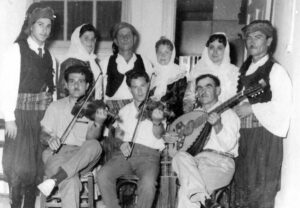
1. The dance tradition of Amorgos
The music-and-dance tradition of Amorgos includes various forms of Syrtos, the Sousta of Amorgos, Balos, Mantinades, and Kalamatianos. In earlier times, local festivities also included Zeibekiko, Karsilamas, Hasaposerviko, and the so-called “European” dances, such as the Waltz and Tango.
Of particular interest is the fact that dance tunes common throughout the island are performed differently from one region to another, especially with regard to style, expressive character, and tempo. In Aigiali, music-and-dance performance tends to be faster and lighter in character, while in Kato Meria it is generally slower and more weighty and grounded in style. In Chora and Katapola, elements of both local tendencies can be observed. Despite these differences, the basic structure of the dance steps remains largely consistent throughout Amorgos.
The Syrtos family includes Silivrianos, Politikos, Thermiotikos, Syrianos, Potamos, Ydraikos, and Michanikos. Each form is danced according to the basic steps of the Syrtos, although with minor individual variations. In general, these are smooth dances without pronounced leaps, featuring restrained tsalemia, turns, and low bending figures performed primarily by the male lead dancer, while the women dance with controlled and understated movements and without pronounced swaying.
Kitsos, which also belongs to the Syrtos family, is a men’s dance. It is lively, vigorous, and characterized by leaping movements. It traditionally opened the island’s festivities and was danced by two men.
The Sousta of Amorgos is a couples’ dance based on Syrtos steps and performed by two or more couples. Initially, the couples move with gliding steps to the right and left. When the musical tune moves into its next section—the next “parti”—the dancers join hands, turn in pairs, and then form a circle. At the next transition of the tune, they hold one another by the shoulders and the steps become more emphatic, incorporating a characteristic, subtle stamping motion that is a distinctive feature of Amorgian dance movement. The Amorgian Sousta was formerly danced exclusively in the Aigiali region and is relatively rarely encountered today. Both the musical tune and the dance itself are found only on Amorgos.
Ni Ke Dre is a men’s Carnival dance. The dancers begin in a straight line, moving to the right and left, and when the musical tune passes into its next section, they dance in place with vigorous stamping of the feet. Ni Ke Dre was formerly danced exclusively in the Aigiali region.
Arapina is a more recent women’s Syrtos dance, traditionally performed by the wives of sailors during evening gatherings held in their homes. The dance is characterized by elegance and grace, with the dancers holding one another by the shoulders.
Balos is a couples’ courtship dance that usually follows the Syrtos dances. During the dance, the man expresses his feelings toward the woman with whom he is dancing. His movements symbolize his attempt to approach and win her over, while the woman responds with modesty and grace. Words or messages were often exchanged between the couple during the dance, while a man’s choice of a particular woman as his partner could reveal a romantic relationship that either already existed or was beginning to develop.
Karotseris is an older dance that is no longer performed. Until the late 1970s, it was danced throughout Amorgos.
1.1. The Traditional Dance Practice of the “Kavos” and the “Falos”
The dance that traditionally opened the festivities was Kitsos, performed by two men: the “Kavos,” who led the dance, and the “Falos,” who followed. After Kitsos, the Kavos would ask the violinist to change the tune and invite the women with whom he wished to dance to join him in a sequence of Syrtos dances. The Falos also remained in the circle but stood at the end of the line of dancers—he “faleve”—and was not permitted to perform tsalemia or other dance figures, since these were the prerogative of the Kavos and an expected part of his role as lead dancer.
After the sequence of Syrtos dances was completed, Balos would usually follow, danced by the Kavos alone with the woman of his choice. The roles would then either be reversed, with the Kavos becoming the Falos and the Falos becoming the Kavos, or the former Falos would select another man to assume the role of Falos while he himself became the Kavos. The new Kavos would then invite the women with whom he wished to dance, and the process would be repeated. Until this sequence had been completed, no other group was permitted to rise and dance. Both the Kavos and the Falos paid the musicians, requesting particular tunes and songs for them to perform.
1.2. The Relationship Between Musicians and Dancers During Music-and-Dance Performance
Older lead dancers, such as Fanis Roussos from Amorgos, recall that there was always a reciprocal, almost “secret,” understanding between the violinist and the dancers, particularly the lead dancers. This communication concerned both the precise moments at which tsalemia and other dance figures were performed and, more broadly, the unfolding of the music-and-dance performance. Through his playing, the violinist would prepare and signal to the lead dancer the appropriate moment for performing the tsalemia, while at the same time allowing him sufficient time to rest between them. Conversely, through his movements and body language, the lead dancer would signal to the violinist that he was ready to perform tsalemia and could also indicate his desire for the dance tune to be performed at a faster or slower tempo. This form of communication developed more readily when musicians and dancers knew one another well and had repeated opportunities to perform together, allowing them to cultivate and deepen their musical and performative relationship.
2. The Dance Tradition of the Islands of Amorgos
The dance tradition of the Islands of Amorgos generally follows the patterns of the Amorgian tradition. It includes dances belonging to the Syrtos family—Silivrianos, Politikos, Thermiotikos, Syrianos, Potamos, Ydraikos, and Michanikos—as well as Balos, Mantinades, and Kalamatianos. Kitsos, the Sousta of Amorgos, Ni Ke Dre, and Arapina are not found on the Islands of Amorgos. In terms of dance steps, the patterns of the Amorgian tradition are generally followed, with minor local variations differing from island to island. Since Kitsos was neither played nor danced on the Islands of Amorgos, the tune and dance that opened the festivities was Silivrianos. Within the traditional dance practice of the Kavos and the Falos, Silivrianos was initially performed by the two men—the Kavos and the Falos—before the remaining tunes and dances followed with the participation of women.
According to the testimony of Georgios G. Oikonomidis:
a) the customary sequence in which the tunes and dances were performed was: Silivrianos, Politikos, Thermiotikos, Syrianos, Dodecanesian Sousta, Balos, and Kalamatianos;
b) Zeibekiko, Karsilamas, and Tsifteteli dances of Asia Minor origin were also played and danced on the Islands of Amorgos.
Source: Oral testimony of Georgios G. Oikonomidis (Amorgos), dance teacher.
THE FOLK-POETIC TRADITION OF AMORGOS AND ITS ISLANDS
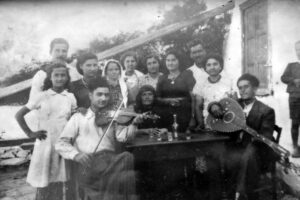
The material relating to the folk-poetic tradition presented in the Digital Audiovisual Folk Music Archive of Amorgos and its Islands derives from a variety of sources. Most of the material was located in unpublished collections preserved in public and private archives. The most important of these are the following:
1) The archive of the Hellenic Folklore Research Centre of the Academy of Athens (KEEL), which held the unpublished collection of the nineteenth-century Amorgian scholar Emmanouil Ioannidis, entitled Emmanuil Ioannidi Amorginou Kataloipa. The collection was compiled in 1857 and includes 6,673 couplets and 180 songs. It is presented independently in the “Archives” section of the present Archive.
2) The archive of the Amorgian philologist and researcher Georgios A. Mavros, which includes, among other materials, an extensive collection of 1,300 couplets, fully categorized and annotated by Mavros himself.
4) Smaller, dispersed private collections located by the research team.
The contents of sources 2-4 are presented in unified and categorized form in the present Archive and include, where available, the collectors’ own comments as recorded in the original sources. At the same time, the Archive of Georgios A. Mavros is also presented independently in the “Archives” section.
Although most of the couplets and songs included in the Digital Audiovisual Folk Music Archive of Amorgos and its Islands belong to the Islands’ oral poetic tradition, the archive of Georgios A. Mavros also contains detailed references and biographical information on Amorgian folk poets of the nineteenth and twentieth centuries, whose works are preserved under their names and in complete form. Among the most important of these are the following; full biographical information on each is presented in the “Biographies” section of the Archive: Giannis tou Petrou (1858–1931), Emmanouil N. Kovaios (Manolios tou Ryaka) (1896–1991), Epameinondas Gavras (1836–1917), Nikolaos G. Nomikos (1892–1987), Mihail I. Passaris (Michalakis o Vounios) (1907–1992), Eirini N. Mavrou (1899–1987), Demetrios Nomikos (Demetrakis tou Spanou) (1900–1997), Demetrios (Demetrakis) Exarchopoulos (1864–1951), and Demetrios N. Despotidis (1920–1999).
THE CUSTOM OF THE CAPTAIN IN AMORGOS
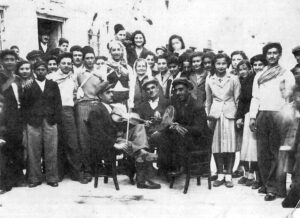
1. The Custom of the Captain in Lagada, Amorgos
According to converging oral accounts, the custom is associated with the so-called massacre of Aimpigi. In Lagada, below the courtyard of the Church of Panagia Epanochoriani, lies a large circular field known as “Aimpigi.” The name is traditionally understood as deriving from the Greek words aima (“blood”) and pignymi (“to coagulate” or “to congeal”), referring to the place where “the blood congealed.” According to local legend, Agar pirates once came up from Megali Vlychada on the feast day of the Virgin Mary and massacred the population of the village in the courtyard of the church. Tradition holds that the blood flowed down and congealed at Aimpigi. The Agar pirates were later driven away by local inhabitants of the island. To honor the leader of the local fighters, the “Kapetanios” (literally “Captain”), the village priest dressed him in an anteri, the garment traditionally worn by Orthodox clergy beneath their cassock. This first “Kapetanios” then returned to the village on horseback, where the expulsion of the pirates was celebrated. It has been suggested that, following the massacre of Aimpigi, the clergy of the time made use of a pre-existing custom as a means of bringing the survivors together, contributing to the reconstruction of the village, and re-establishing the community. The ritual of the custom thus appears to incorporate two distinct levels of symbolism: a religious reference, evoking Christ’s entry into Jerusalem, and a theme of liberation, centered on the victorious warrior, the “Kapetanios,” who drives away the invaders and subsequently celebrates the restoration of freedom together with the community.
The men, both younger and older, then change into traditional clothing—vrakes (breeches), fezzes, sashes, and vests—while the Captain mounts a decorated horse. At the same time, the “Lávaro,” or ceremonial banner of the celebration, is prepared: a wooden pole to the top of which are attached a loaf of bread, a round of cheese, and either a piece of dried cod or a dried octopus. The cheese symbolizes Tyrofagos week, the bread symbolizes strength, and the octopus represents the period of Lent that follows before Easter. The Lávaro is carried by the leader of the procession, the “Bairaktaris,” usually a person particularly close to the Captain. The procession then begins its return toward the village, with the Apokrianos sung continuously along the way.
At “Portara” in Lagada, the procession is awaited by the unmarried women of the village, who are also dressed in traditional costumes. The procession stops there, and the singing continues with improvised verses that become more specifically directed toward the young women, referring to their beauty, their anticipation of this particular day, and related themes. The procession then enters the village and makes its way through its many narrow streets. Residents come out to the doorways of their homes and shops and offer food and drink to the Captain and his entourage. After completing its route through the village, the procession returns to the main square.
As it enters the Loza, the final improvised verses are sung and the Apokrianos comes to an end. The Captain rides his horse back and forth across the square three times, then stops and dismounts. The musicians take their place in the center of the square, and the Captain opens the dancing with the “Kitsos.” Kitsos is a traditional instrumental tune and dance of the Aigiali region and is performed exclusively by men. After the men have completed the Kitsos, the Captain approaches the assembled unmarried women and throws his handkerchief toward the woman of his choice—the woman with whom he is in love—thus inviting her to dance. In this sense, the custom of the Captain may also be understood as a ritual through which previously unspoken romantic feelings are publicly revealed. The central participant is given the opportunity to declare his love openly before the entire village and, in a sense, to receive the acceptance and goodwill of the community so that the relationship may develop. In earlier times, this act could even be regarded as a formal engagement. This was connected to the fact that the elder who selected the Captain was the village priest himself. Through confession, the priest knew which couples were in love and could therefore know whether their feelings were mutual. He would approve—or disapprove—of the relationship and, when he approved it, would give the young man the opportunity to become Captain, invite the young woman to dance, and thus publicly reveal his love. Once the relationship had received the priest’s approval, it was extremely difficult for either the community or the families involved to object. The priest selected the Captain by covering him with the “zoumbes,” a type of outer clerical robe. In addition to the rest of his traditional costume, the Captain continued to wear the zoumbes throughout the performance of the custom. This practice survived until the early 1950s. Following the Captain’s selection of the “Kapetanissa,” (Captainess) the dancing began, and the Carnival celebration at the Loza continued until sunset. The Captain would then lead everyone present to his house, where he offered them food and drink, and later the celebration continued in the village tavernas.
2. The Custom of the Captain in Tholaria, Amorgos
The celebration of the Custom of the Captain in Tholaria, Amorgos, shares many similarities with that of Lagada. It is likewise revived every year on the final Sunday of Tyrofagos week, before Clean Monday and the official beginning of Lent.
At the small chapel of Agios Dimitrios outside Tholaria, mainly the younger men of the village gather at around 11:00 in the morning. There, an elder selects the Captain, and the participants dress in traditional costumes. Before the vest is given to the Captain, improvised couplets—mantinades—are sung to the melody of the Apokrianos.
The Bairaktaris—or Bailaktaris—takes his place at the head of the procession, followed by the Captain and the musicians. The procession leaves the chapel and heads toward Tholaria, arriving at approximately 2:00 in the afternoon at a location known as “Seladi,” at the western entrance to the village. There, the prospective “Kapetanisses” (Captainesses)—the unmarried women of the village—wait dressed in traditional costumes. From this point onward, local shops begin offering food and drink to the participants, and the procession continues through the narrow streets of Tholaria. Residents wait in the courtyards of their homes and offer refreshments to those taking part. A little later, the Captain rides his horse three consecutive times along a straight stretch of road. Everyone then proceeds together to the courtyard of the Church of Agioi Anargyroi. There, the Captain opens the dancing with the “Kitsos,” after which the “Kapetanissa” is selected. The unmarried women sit in a row, and the Captain throws his handkerchief toward the woman he desires, thereby publicly revealing his love for her. The celebration then begins in the church courtyard and later spreads to various parts of the village.
In earlier times, the custom began at Agios Ioannis at Akrotiri in Tholaria, while the selection of the Captain was the responsibility of the village priest.
3. The Custom of the Captain on Schinousa
The celebration of the Custom of the Captain on Schinousa bore significant similarities to the corresponding custom on Amorgos. The custom ceased to be celebrated on the island around the mid-1970s when, according to local accounts, an abbot of the period regarded it as incompatible with Christian practice.
On Schinousa, the Captain was selected exclusively by the priest, immediately after the church service on the final Sunday of Tyrofagos week. Those present would then carry him in their arms from the church to the café, where he offered food and drink to everyone gathered there. As on Amorgos, the priest’s choice of the Captain was often associated with an existing romantic relationship or with the young man’s anticipated marriage to a woman from the island. The ceremonial banner of the celebration was known as the “Baeraki.” It consisted of a wooden pole to the top of which were attached a loaf of bread, a dried octopus, garlic, onions, and a flag. All the food items used to decorate it were provided by the Captain. A local celebration with music and dancing always followed, either at the café or in private homes, and continued until the priest rang the church bell, thereby signaling the end of the festivities.
Sources:
1) Testimony of Antonios N. Roussos. Istorima.org. https://www.istorima.org/podcast/451/o-anomologitos-erotas-tou-kapetaniou/
2) Testimony of Manolis Vasalos. Kastro tis Amorgou 27 (2006): 16–17.
3) Oral testimony of Dimitrios N. Theologitis.
4) Oral testimony of Nikolaos Kovaios.
5) Oral testimony of Georgios Kovaios.
6) Article signed by a contributor using the pseudonym “Lagadianos.” Aigiali 88 (1985): 5.
7) Article signed by M. Synodinos. Aigiali 151 (1996): 5.
CONTRIBUTORS
Principal Investigator / Project Coordinator
Dr. Panagiotis Liaropoulos, Associate Professor, Berklee College of Music – Panagiotis Liaropoulos
Local Collaborators
Markos I. Gavras (Amorgos), musician
Nikitas K. Giannakos (Amorgos), musician
Georgios G. Oikonomidis (Amorgos), dance teacher
Nikolaos D. Oikonomidis (Schinousa), musician
Informants
Amorgos: Nikolaos M. Vazaios (1965), Michail E. Vlavianos (1938), Antonios D. Gavalas (1933), Dimitrios A. Gavalas (1966), Markos I. Gavras (1960), Stamatis N. Giannakopoulos (1974), Antonios I. Giannakos (1984), Nikitas K. Giannakos (1974), Ioannis M. Theologitis (1989), Stamatis N. Theologitis (1966), Nikolaos D. Theologitis (1933), Ioannis M. Kovaios (1964), Nikolaos Kovaios (1941), Dimitrios N. Kovaios (1991), Anargyros Nomikos (1946), Diasyno Nomikou, Georgios G. Oikonomidis (1964), Georgios D. Oikonomidis (1963), Antonios N. Roussos (1979), Fanis Roussos (1934), Ioannis D. Skopelitis (1956), Nikolaos K. Stefanopoulos (1941), Ioannis Ch. Synodinos (1953), Nikitas M. Synodinos (1931), Nikitas S. Synodinos, Varvara S. Synodinou, Eirini Synodinou-Vassalou (1928)
Donousa: Dimitrios Kovaios (1938), Fani Prasinou (1932), Ilias D. Skopelitis (1955)
Irakleia: Evangelos G. Gavalas (1953), Michail Kovaios (1931)
Koufonisia: Georgios Venetsanos (1960), Georgia Kovaiou (1964), Konstantinos Prasinos (1941), Evangelos M. Roumeliotis (1949), Mathios Skopelitis (1950), Ioannis Symigdalas (1985)
Schinousa: Georgios Kovaios (1933), Margarita Kovaiou (1935), Nikolaos D. Oikonomidis (1960)
Public and Private Archives Made Available for Inclusion in the Digital Audiovisual Folk Music Archive of Amorgos and its Islands
Archive of Georgios A. Mavros – Made available by: Marilena Gypari
Photographic Archive of Antonios Vlavianos – Made available by: Vasileios A. Vlavianos
Audiovisual Archive of Ioannis Kovaios – Made available by: Ioannis M. Kovaios
Archive of Emmanouil Ioannidis of Amorgos – Made available by: Hellenic Folklore Research Centre, Academy of Athens
Graphic Design / UI–UX
Athanasios Gounaris – NO IDEA Graphic Design
IT Support
Ioannis Passalidis – Jamp Web Solutions
Sound Engineer
Evangelos Sapounas – Subway Studios
Digitization / Transcriptions / Text Editing
Agamemnon Tselikas – ARETHAS, Mediterranean Institute for Research in Palaeography, Bibliology and the History of Texts
Hellenic Music Centre (HMC)
Translations
Panagiotis Liaropoulos